Tuesday 17th February 2015 by Jack Newman
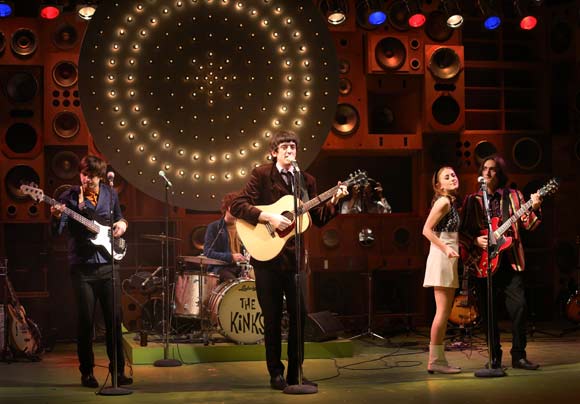
The Kinks and the era they helped define are brought back to life in Sunny Afternoon
The rafters of the Harold Pinter theatre have recently been ringing with the sound of the 60s. The English aristocrat’s lament and ultimate summer song, Sunny Afternoon, is belted out in celebration of England’s 1966 World Cup victory, while the whole theatre is alive with the emotion and excitement of a summer to remember. Feeling like yesterday but now nearly half a century ago, this scene more than any other demonstrates the importance to the social change and musical experimentation of the 1960s. The Kinks played an instrumental part in this cultural transformation, and provided lyrical commentary for a nation on the rebound from decades of hardship. Sunny Afternoon the musical gives us a biography, a showcase of The Kinks’ music and a perfect slice of the 1960s, hitting each nail firmly on the head.
The story suitably begins from the beginning and follows the band as they land their first record deal, record their first hit and tour America for the very first time. With many ‘jukebox’ musicals the biographical dimension is pretty much the order in which the songs are played, with a few brief pieces of dialogue to tie the show together. There is nothing wrong with this style of production, and it works especially well for shows where the set piece musical numbers are really the only things that matter. However, for Sunny Afternoon the biography is the core of the show, with the songs imaginatively blended into the storyline. This makes Sunny Afternoon a very different experience from seeing a good tribute band. As well as giving audiences an insight into the band’s history and the personalities of its members, this vibrant production creates an electric atmosphere that transports you back to the swinging sixties.
With Dead End Street, the show explores the hardships faced by the Davies family and the crushing uncertainty felt by many in post-war Britain. This stirring scene hints towards a political edge that crops up again when the band members are accused of being communists on their first visit America. However, these two scenes are nods towards a sharper and bolder social commentary that the show ultimately shied away from. If the politics is perhaps underplayed, the relationships between the characters are explored in way that is complex, rich and deeply moving. The untimely death of Ray and Dave’s sister Rene at the age of 31 (while they were aged just 13 and 10 respectively) casts a shadow over the lives of both brothers and is a poignant constituent of story.
The relationship between the two brothers drives the story forward and is the dramatic centrepiece of show. With some moving scenes of creative cooperation, some tense scenes of bitter resentment and with sparks flying throughout, their collaboration is the success story of The Kinks, as well as the success story of this musical. If you are a fan of the band and are looking for a rich and fascinating exploration of their history, you will not be disappointed. If you are a nostalgic type who wants to be transported back to the booming Britain of the swinging sixties, you will not be disappointed. If you are looking for a high quality showcase of The Kinks’ greatest hits, you certainly will not be disappointed.
Seating hint: with pillars aplenty and a protruding stage in this theatre, it can be difficult to get a good view of the show; sitting in the front dress circle is a good option, but if you can persuade some friends to join you, the central tables for four at the back of the stalls give a great view.
Fancy booking a West End theatre break to see Sunny Afternoon? We can help! Packages are available from just £68pp.